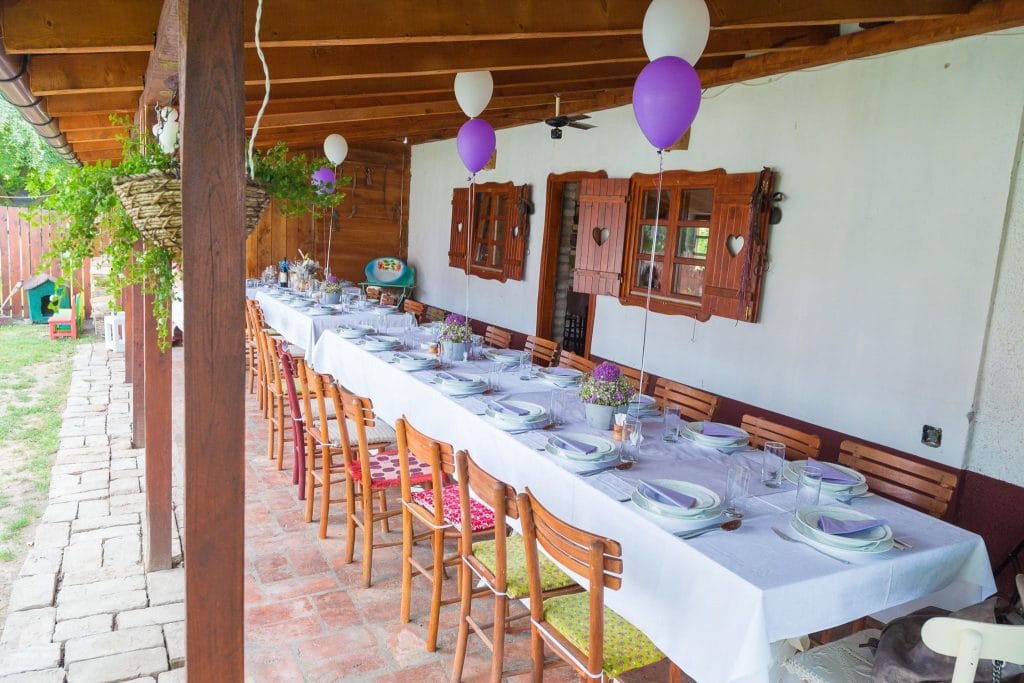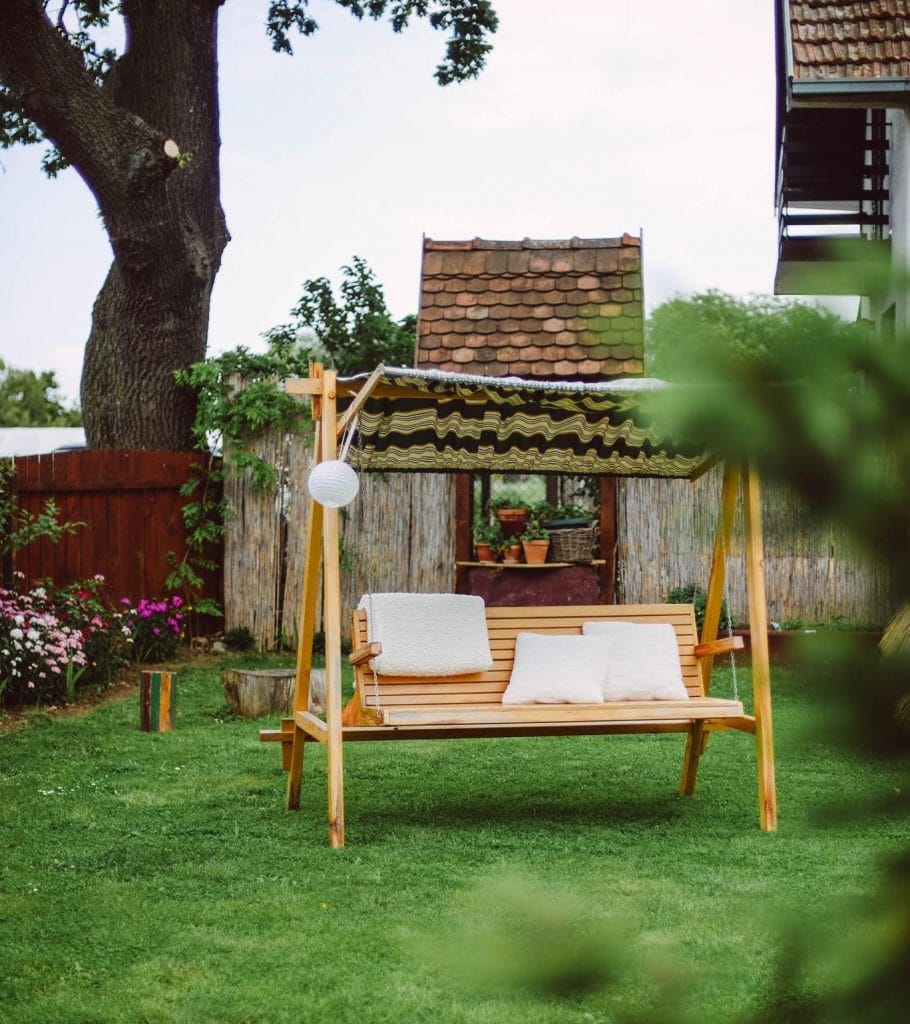
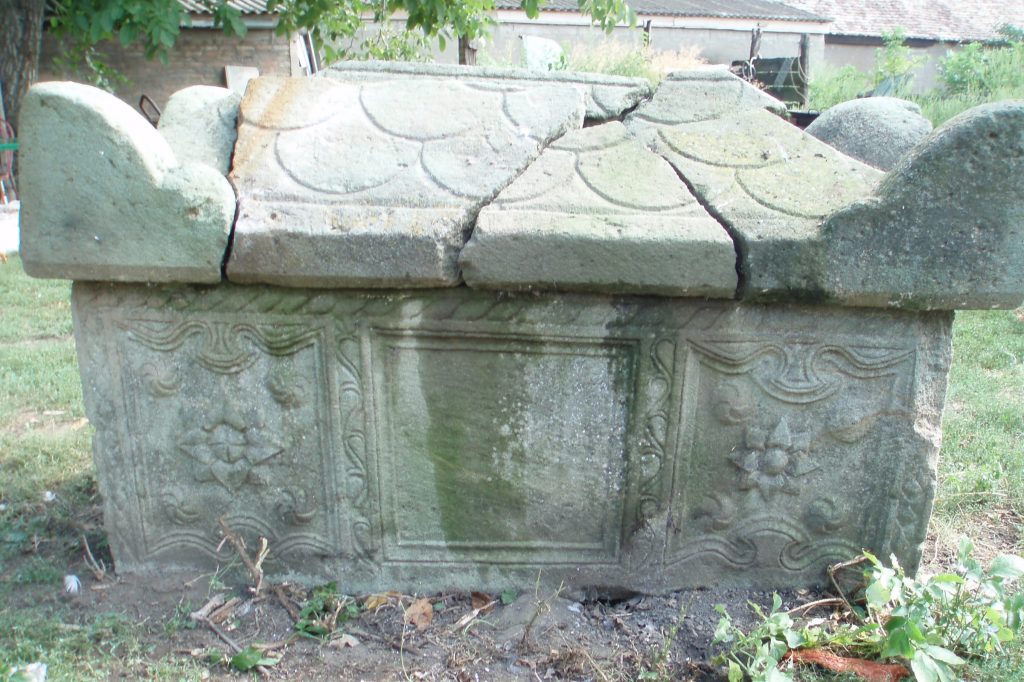
In the salaš yard stands the Star Sarcophagus — a complete Roman sarcophagus from Sirmium, chest and lid, carved in the 3rd or early 4th century. It was found by chance in 1990 in Sremska Mitrovica and has been kept here ever since; in 2026 the archaeologists Bojan Djurić and Jasmina Davidović described it in a volume of the Institute of Archaeology in Belgrade. To be clear from the start: we are a salaš, not a museum. The sarcophagus is seen as part of an announced group visit of at least 25 people, with a meal. It is registered with the Museum of Srem and kept at the salaš with the museum’s approval.
The Star Sarcophagus of Salaš Isailovi: a Roman sarcophagus from Sirmium
For the guide and the agency, at a glance
| What it is | A complete Roman sarcophagus: chest and roof-shaped lid, in greenish volcanic stone |
|---|---|
| Where from and when | Eastern necropolis of Sirmium (Sremska Mitrovica); a chance find during building work in 1990; 3rd – early 4th century |
| Stone | Hyaloclastite — volcanic rock from eastern Bosnia; only the Sirmium workshop used it for sarcophagi |
| Dimensions | Chest 183 × 90 × 75 cm; lid 194 × 105 × 50 cm |
| Where it stands | In the salaš yard, in the open, a short walk from the car park |
| Who sees it | Only announced groups of at least 25 people, as part of a visit with a meal |
| The host’s story | About two minutes at the stone, before the meal; after the meal if the group is late |
| Surcharge | None — it is part of the visit |
| Languages | English directly; German with interpreting when needed; other languages through the group’s guide — the facts are on this page in five languages |
| Photos and touching | Allowed; nobody climbs on the lid |
| For schools | Within the step “a short talk about the salaš” of the basic programme, with no new item in the timetable |
| Status | Registered with the Museum of Srem; kept at the salaš with the museum’s approval |
| Source | B. Djurić and J. Davidović, Institute of Archaeology, Belgrade 2026, pp. 81–91 |
| Contact | +381 65 5506929, salas.isailovi@gmail.com |
How the Star Sarcophagus came to the salaš: 1990 → 2026
It all began by chance. In 1990, during building work in Sremska Mitrovica, a whole Roman sarcophagus was pulled out of the ground: the chest almost intact, the lid in six pieces. The find spot is the eastern necropolis of Sirmium — the part of the ancient town where its inhabitants were buried seventeen centuries ago.
Those who dug it out could still see colour: traces of red and blue on the stone. Those colours have since disappeared. The stone was moved to the family salaš east of the town, where it stands today and where the family has kept it for more than 35 years.
In 2026 the Institute of Archaeology in Belgrade published the first scientific paper on it: Bojan Djurić (University of Ljubljana) and Jasmina Davidović (Museum of Srem) described it in the volume “Verba volant, scripta manent”. Until then it had been, as the authors write, unknown to the professional public.
One thing not even the paper knows: who was buried in it. The middle panel on the front, meant for the inscription, was left blank — the name was never carved. We only know that the person lay in a town that was just then becoming one of the capitals of the Empire.
What the group sees
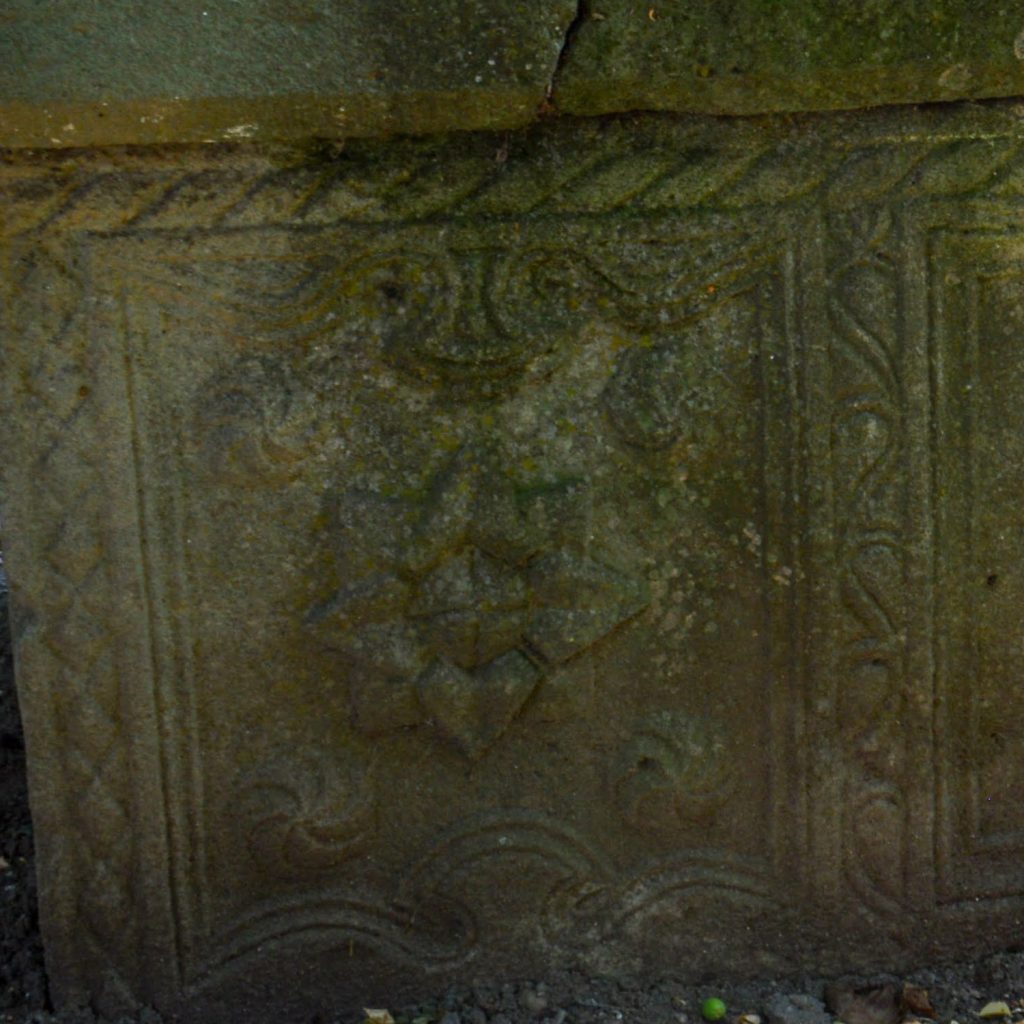
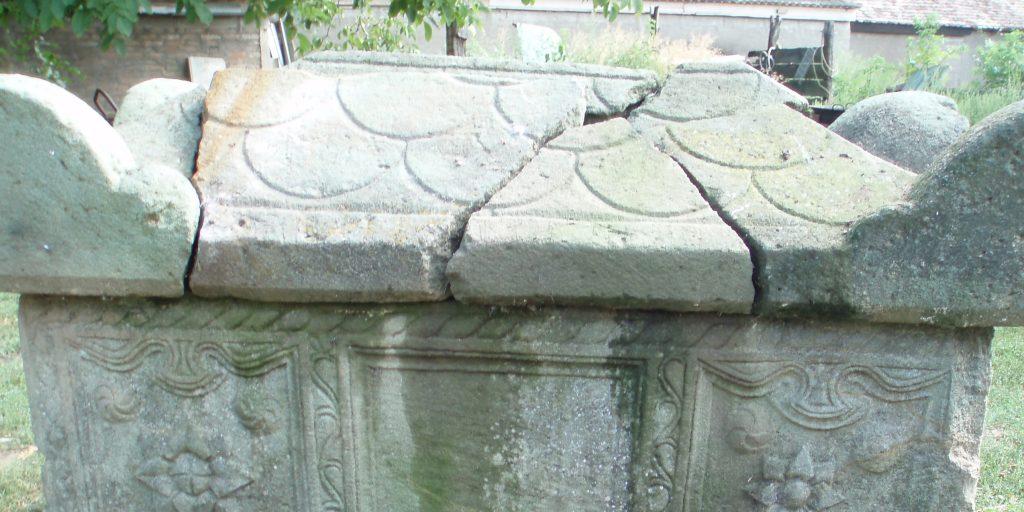
The front has three panels. The middle one is blank: that is where the name of the dead should have been. In the side panels are two star-like rosettes with eight petals each — in the place where, on other Sirmium sarcophagi, the portraits of the dead stand. That is how the sarcophagus got its name.
Around each rosette are four round “nails” carved as whirling discs. Archaeologists read them as suns — perhaps the four seasons, an image of life renewing itself. One disc whirls the other way and one does not whirl at all; according to the authors that is not by chance, but there is no explanation yet.
The lid is a hipped roof with corner ornaments; the scales on its front slope are roof tiles. No such roof exists on sarcophagus lids in Pannonia — related forms are known from Salona, Greece and Asia Minor. On the short right side there is a hole: robbers opened the sarcophagus back in Antiquity.
- Look closely: the blank middle panel — a name was never carved.
- Two star-like rosettes where portraits would usually be.
- Four discs around each: one whirls the other way, one does not whirl.
- The lid as a roof; the scales are its tiles.
- The hole on the short right side — robbers, back in Antiquity.
How it fits a group's programme
The sarcophagus does not change the timetable: the host shows it to the group before the meal, the story takes about two minutes and everything stays within the usual stay of two to three hours. If the group is late, the story comes after the meal. There is no surcharge — it is part of the visit.
For groups on the Roman Emperors Route (Module 2) the sarcophagus rounds off the Roman part of the day: the Imperial Palace and the Museum of Srem in town in the morning, then 5 km to the salaš — and a stone from the same Sirmium workshop whose relatives stand in the museum courtyard. For school trips it is a history lesson on the spot, within the step “a short talk about the salaš”, with no transfer. For groups in transit on the E70 and for the day trip from Belgrade — two minutes before the meal, and the lunch stop has a story to tell.
- Module 2 — Sirmium and a Srem lunch: the town in the morning, the sarcophagus and lunch in the afternoon (Group programmes).
- School trips: the story at the stone within the basic programme (Schools and kindergartens).
- A whole day with Sirmium: Sirmium and Sremska Mitrovica in a day.
- Conditions as for every group: at least 25 people, notice at least a day ahead, the meal ready on arrival (Groups).
- We do not organise individual visits or viewing without a meal; the nearest public collection of Sirmium sarcophagi is the Lapidarium of the Museum of Srem (Trg Svetog Stefana 15).
For your catalogue and itinerary
You may copy the text below word for word into an itinerary or catalogue. The other language versions of this page carry it in that language.
One sentence: “Lunch at a family salaš near Sremska Mitrovica, in whose yard stands the Star Sarcophagus — a complete Roman sarcophagus from Sirmium (3rd – early 4th century), registered with the Museum of Srem and published in 2026 in a volume of the Institute of Archaeology.”
Three sentences: “Salaš Isailovi is a family farmstead from 1965, 5 km from the centre of Sremska Mitrovica — ancient Sirmium. In its yard stands the Star Sarcophagus, a Roman sarcophagus of green Sirmium stone, found in 1990 in the town’s eastern necropolis and scientifically published in 2026. The host tells the group the story of the stone, and lunch comes from the brick oven.”
Please do not write: that the sarcophagus was found at the salaš (it was found in town), that it is “imperial” (the deceased is unknown), or that it is “the family’s” or “ours” — it is registered with the Museum of Srem and kept at the salaš with the museum’s approval.
For the curious: stone, workshop, dating
The sarcophagus is carved from hyaloclastite — a dark grey-green volcanic rock formed when dacitic lava meets water. The analysis was done by Polona Kralj of the Geological Survey of Slovenia; the closest matching stone is quarried near the village of Rajići, some twenty kilometres south of Zvornik. As far as science knows, the Sirmium workshop was the only one to carve sarcophagi from this green stone, for buyers from the town and its surroundings.
Related sarcophagi of the same stone were found in Zasavica, Inđija, Belgrade, Titel and Zemun, and a chest with relief of the same stone stands in the courtyard of the Museum of Srem — whoever goes on to the Lapidarium after the salaš will see a “brother” of this stone (Ubi Erat Lupa 4356). Star-rosettes of this shape are unknown in Pannonia, Dalmatia and Upper Moesia; an identical one is carved on a gravestone from the Greek island of Thasos.
Dating: the 3rd century, at the latest the first decade of the 4th. That is the time when Sirmium was becoming one of the four capitals of the Empire — but the sarcophagus is not imperial. It was made for one of the town’s inhabitants; in Antiquity not everyone could afford a stone sarcophagus with relief.
Every fact on this page comes from the paper: Bojan Djurić (Univerza v Ljubljani) and Jasmina Davidović (Muzej Srema), “The Isajlovi Sarcophagus from Sirmium”, in: Verba volant, scripta manent: (Donum) Ivanae Popović ab amicis et collegis oblatum, Arheološki institut, Beograd 2026, pp. 81–91, ISBN 978-86-6439-125-2. The volume is open access (CC BY-NC-ND 4.0): hdl.handle.net/21.15107/rcub_rai_2324. The readings of the symbolism are the authors’ own; what the paper does not say, we do not say either. The paper names the monument after the estate where it is kept; the salaš and the family are spelt Isailovi. The photographs on this page are ours — the illustrations in the volume may not be used commercially.
For researchers and institutions
The sarcophagus is published and can be studied on site, by prior arrangement: it stands in the salaš yard, 5 km from the Imperial Palace and the Museum of Srem in Sremska Mitrovica. For work over several days there are three rooms with two beds each, on request and subject to availability. We clean and move nothing on the stone without the conditions of the competent institution. Museums, institutes, faculties and conservators who wish to examine or document it can write to us at salas.isailovi@gmail.com — tell us who is coming, when, and what you need on site.
Put the sarcophagus into your group's programme
Three details are enough for an offer: the number of people, the date and the time of the meal. Add which module you are using, or that it is a school trip, and you receive a price list, a proposed menu and a proposed timetable with the story at the sarcophagus. Write to salas.isailovi@gmail.com or call +381 65 5506929. The salaš works by prior arrangement only, for groups of at least 25 people, at least one day in advance.